What Is Mobile Tyre Fitting and How Does It Work?
Imagine you’re rushing to an important meeting when suddenly your car tyre goes flat. The thought of calling a tow truck, driving to a garage, and waiting for hours feels overwhelming. What if there was a simpler solution? Mobile tyre fitting brings the garage to your doorstep, whether you’re at home, work, or stranded on the roadside. This convenient service is changing how drivers handle tyre problems, making quick tyre replacement and repairs easier than ever before.
In this blog post, we’ll cover everything you need to know about mobile tyre fitting, from how it works to its benefits, costs, and safety measures.
Understanding Mobile Tyre Fitting
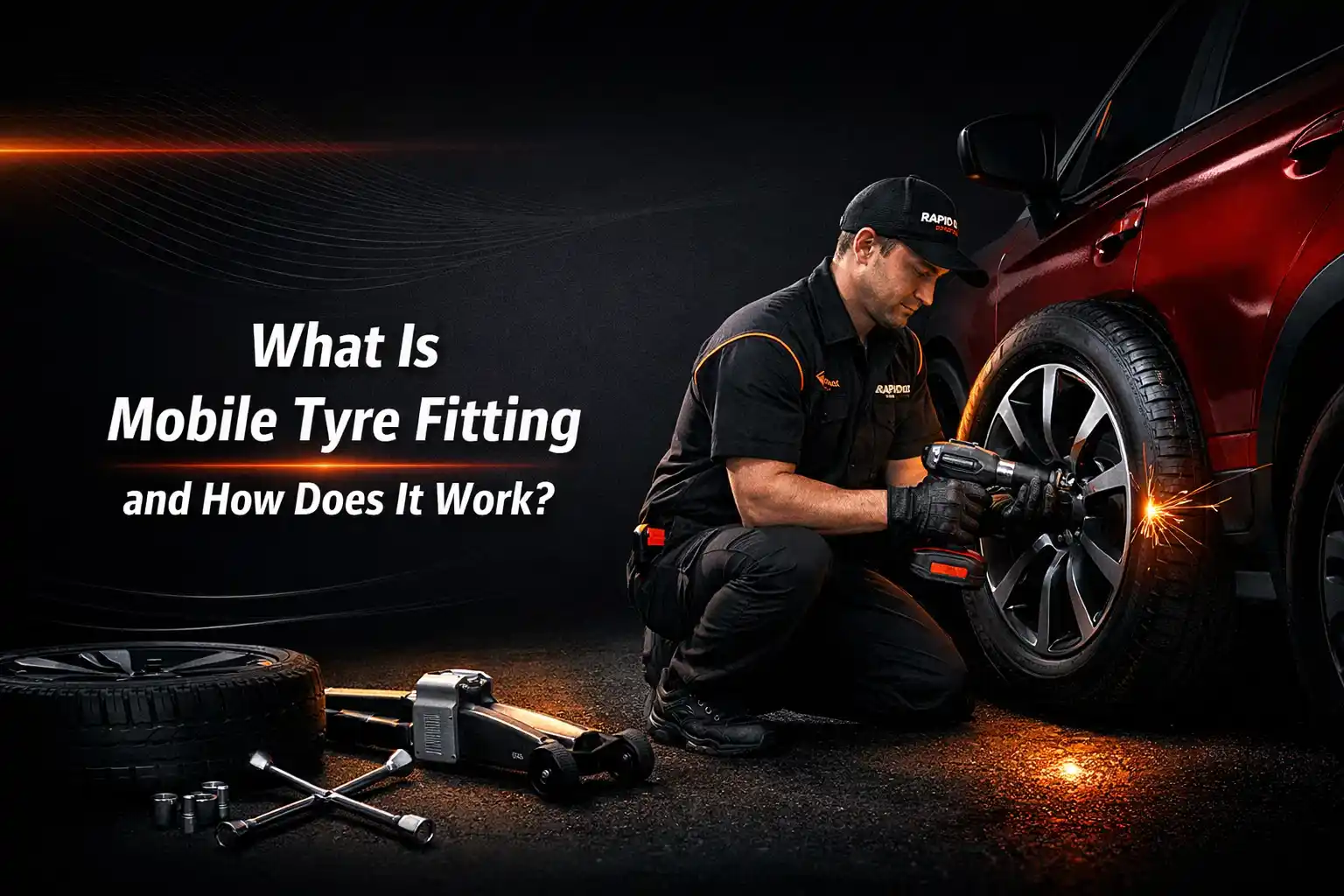
Mobile tyre fitting is a service where professional technicians come directly to your location to repair or replace your vehicle’s tyres. Instead of you driving to a traditional garage, the garage comes to you in a specially equipped van.
This service works anywhere you need it, your home driveway, office parking lot, or even on the side of the road during an emergency. The technicians carry all the necessary equipment and tyres to complete the job on-site. Think of it like ordering food delivery, but instead of pizza, you’re getting professional tyre installation at home.
The mobile tyre fitting process is designed for maximum convenience. You simply book an appointment through a phone call or website, specify your location and tyre needs, and a qualified technician arrives at your chosen time. According to the RAC Foundation, roadside tyre issues account for millions of breakdowns annually in the UK alone, making mobile services increasingly valuable.
How Mobile Tyre Fitting Works (Step-by-Step)
Understanding what happens during mobile tyre fitting helps you know what to expect. Here’s the complete process:
- Booking Your Appointment: Contact the service provider with your vehicle details, location, and preferred time. Many companies offer emergency tyre fitting for urgent situations.
- Initial Vehicle Inspection: The technician examines your tyres to determine whether repair or replacement is necessary. They check for punctures, sidewall damage, tread depth, and overall tyre condition.
- Vehicle Preparation: Your car is safely lifted using professional-grade jacks. The technician ensures the vehicle is stable and secure before removing any tyres.
- Tyre Removal: The damaged or worn tyre is carefully removed from the wheel using portable equipment.
- Repair or Replacement: Depending on the damage, the technician either repairs the puncture or fits a new tyre. The new tyre is mounted onto the wheel rim.
- Balancing and Inflation: The tyre is balanced to ensure smooth driving and inflated to the manufacturer’s recommended pressure.
- Final Testing: The technician performs a thorough safety check, ensuring everything is properly fitted and secure.
- Clean-Up and Payment: The work area is cleaned, and you receive documentation of the service completed.
The entire mobile tyre fitting process typically takes 30-60 minutes per tyre, depending on the complexity of the job.
Equipment Used in Mobile Tyre Fitting
Professional on-site tyre fitting requires specialised tools that technicians bring in their mobile units:
Portable Tyre Changer: This compact machine removes old tyres from wheel rims and mounts new ones. Unlike traditional garage machines, these are designed for mobility without sacrificing functionality.
Hydraulic Jack and Lifting Equipment: Heavy-duty jacks safely lift vehicles of all sizes. Professional technicians use multiple jacks and safety stands to ensure vehicle stability during the service.
Tyre Inflator and Air Compressor: These tools inflate tyres to the precise pressure levels recommended by your vehicle manufacturer. Proper inflation is crucial for safety, fuel efficiency, and tyre longevity.
Wheel Balancing Machine: Portable balancers detect weight imbalances in the tyre and wheel assembly. Balanced tyres prevent vibrations, uneven wear, and potential steering problems.
Safety Gear and Tools: This includes torque wrenches (to ensure lug nuts are tightened correctly), valve stem tools, tyre pressure gauges, and personal protective equipment for the technician.
The British Tyre Manufacturers’ Association emphasises that professional equipment is essential for safe and effective tyre fitting.
Types of Tyre Services Covered
Tyre Repair
Mobile tyre repair addresses various types of damage. Puncture repair is the most common service, typically used for small holes in the tread area caused by nails, screws, or other sharp objects. Professional technicians can permanently repair punctures up to 6mm in diameter.
Sidewall damage, however, usually requires replacement rather than repair because the sidewall experiences constant flexing and stress. Attempting to repair sidewall damage can be dangerous.
- Temporary repairs (like sealant sprays) are quick fixes to get you to a safe location.
- Permanent repairs involve removing the tyre and applying a patch from the inside.
- Permanent repair is the safe and proper long-term solution.
Safety considerations include checking that the damage is within repairable limits, ensuring the tyre hasn’t been driven on while flat (which can cause internal damage), and verifying the tyre still has adequate tread depth.
Tyre Replacement
Tyre replacement service becomes necessary when repair isn’t safe or possible. Common reasons include:
- Tread depth below legal limits (1.6mm in the UK)
- Significant sidewall damage
- Multiple punctures
- Age-related deterioration (tyres over 6-10 years old)
- Uneven or excessive wear patterns
The quick tyre replacement process involves all the steps mentioned earlier, with special attention to tyre types. Different vehicles require different tyres:
- All-season tyres: Balanced performance year-round
- Summer tyres: Optimal grip in warm, dry conditions
- Winter tyres: Enhanced traction in cold, snowy weather
- Run-flat tyres: Allow limited driving after a puncture
Tyre balancing is crucial during replacement. Unbalanced tyres cause vibrations at certain speeds, uneven tread wear, and strain on suspension components. Professional technicians use precision equipment to ensure perfect balance.
Benefits of Mobile Tyre Fitting
The advantages of car tyre fitting at home or wherever you need it are significant:
- Ultimate Convenience: No need to rearrange your schedule or visit a garage. The service comes to you at home, work, or roadside.
- Time-Saving: Avoid waiting rooms and garage queues. You can continue your daily activities while the technician works on your vehicle.
- Enhanced Safety: If your tyre fails in an unsafe area or during bad weather, you don’t have to drive on a damaged tyre or wait in a vulnerable location.
- 24/7 Availability: Many mobile services offer round-the-clock emergency tyre fitting, providing peace of mind during unexpected breakdowns.
- No Transportation Hassles: Perfect for families with one vehicle, elderly drivers, or anyone who finds visiting garages challenging.
- Professional Service: You receive the same quality service as traditional garages, but with added flexibility.
- Immediate Solution to Flat Tyres: Instead of being stranded, help arrives quickly, getting you back on the road faster.
According to a 2024 consumer survey by Which?, 78% of drivers who used mobile tyre services reported higher satisfaction compared to traditional garage visits, primarily citing convenience and time savings.
Safety Measures During Mobile Tyre Fitting
Wondering if mobile tyre fitting is safe? When performed by qualified professionals, it’s as safe as garage-based fitting, sometimes safer because technicians work in familiar, well-lit outdoor environments.
Vehicle stabilisation is the foundation of safe mobile fitting. Technicians use multiple jack points, wheel chocks, and safety stands to prevent any movement during service. They never work under a vehicle supported only by a jack.
Correct tyre installation involves several critical steps: ensuring the tyre is properly seated on the rim, tightening lug nuts in the correct sequence and to manufacturer-specified torque, and verifying the valve stem is in good condition.
Pressure checks are performed using calibrated gauges. Under-inflated tyres cause poor handling and increased fuel consumption, while over-inflated tyres reduce grip and increase puncture risk.
Post-service inspection includes checking all lug nuts are secure, verifying tyre pressure one final time, examining for any signs of damage during fitting, and ensuring the wheel alignment appears correct.
Here’s a comparison of safety protocols:
Safety Measure | Mobile Fitting | Traditional Garage |
Equipment Quality | Professional portable tools | Professional fixed tools |
Technician Training | Certified professionals | Certified professionals |
Work Environment | Outdoor (weather-dependent) | Indoor (controlled) |
Vehicle Stability | Multiple jack points & chocks | Professional lifts |
Convenience | Comes to you | You visit them |
Tips for drivers to ensure safety: Choose reputable, certified providers, verify the technician’s credentials, ensure adequate lighting if service is performed at night, ask questions about the process, and request documentation of the service completed.
Cost and Pricing of Mobile Tyre Fitting
Understanding the mobile tyre fitting process costs helps you budget appropriately. Pricing varies based on several factors:
Typical charges for mobile tyre fitting range from £60-£150 per tyre, including fitting, balancing, valve replacement, and disposal of old tyres. This is often comparable to or only slightly higher than traditional garage prices.
Factors affecting cost include:
- Tyre type and size: Run-flat tyres and larger sizes cost more
- Service distance: Locations far from the provider’s base may incur travel fees
- Emergency calls: Out-of-hours or urgent services typically cost 20-30% more
- Number of tyres: Many companies offer discounts for multiple tyres
- Additional services: Balancing, alignment checks, or repairs add to the base price
Value comparison: While mobile fitting might cost £10-20 more per tyre than DIY garage visits, consider what you’re gaining: your time (worth far more than £20), convenience, safety, and a professional guarantee.
Real-life example: Sarah, a working mother from Manchester, had a flat tyre on Monday morning. A traditional garage would have required her to take time off work, arrange childcare, and spend 2-3 hours waiting. Instead, she paid £75 for a mobile fitting at her office car park while she worked. She saved time, avoided childcare costs, and didn’t miss work.
For more information on specific services and pricing, visit mobile tyre fitting.
Final Verdict:
Mobile tyre fitting makes tyre repairs and replacements fast, safe, and convenient, wherever you are home, work, or roadside. It saves time, avoids garage queues, and ensures professional service with certified technicians and proper equipment. From emergency puncture repairs to scheduled tyre replacements, this service adapts to your needs. The benefits are clear: safety, convenience, and stress-free tyre care.
Don’t wait in line at a garage! Contact Rapid Fix Mobile Tyres today for expert mobile tyre fitting, puncture repair, or emergency assistance and get your tyres fixed at your doorstep.
Frequently Asked Questions
1. What is mobile tyre fitting?
Mobile tyre fitting is a service where tyres are repaired, replaced, or installed at your home, office, or roadside without visiting a garage. It’s fast, convenient, and often available 24/7.
2. How does mobile tyre fitting work?
A technician comes to your location with portable equipment, inspects the tyres, repairs or replaces them, balances the wheels, and ensures proper pressure and safety.
3. Is mobile tyre fitting safe for all cars?
Yes, mobile tyre fitting is safe for most passenger cars and light vehicles, as technicians follow standard installation and safety procedures using proper tools.
4. How long does a mobile tyre fitting take?
Most mobile tyre fitting jobs take between 30 and 60 minutes, depending on the type of repair or replacement needed and the number of tyres involved.
5. Can I get an emergency mobile tyre fitting at night?
Yes, many providers offer 24/7 emergency mobile tyre services, so flat tyres or punctures can be fixed quickly anytime, even at night or on the road.
6. What equipment do mobile tyre fitters use?
Technicians use portable tyre changers, jacks, inflators, balancing machines, and safety gear to repair or replace tyres efficiently at your location.
7. How much does mobile tyre fitting cost?
Costs vary depending on tyre type, service distance, and urgency, but mobile tyre fitting is often comparable or slightly higher than garage visits due to convenience.