
How to Jump Start a Car: Step-by-Step Guide
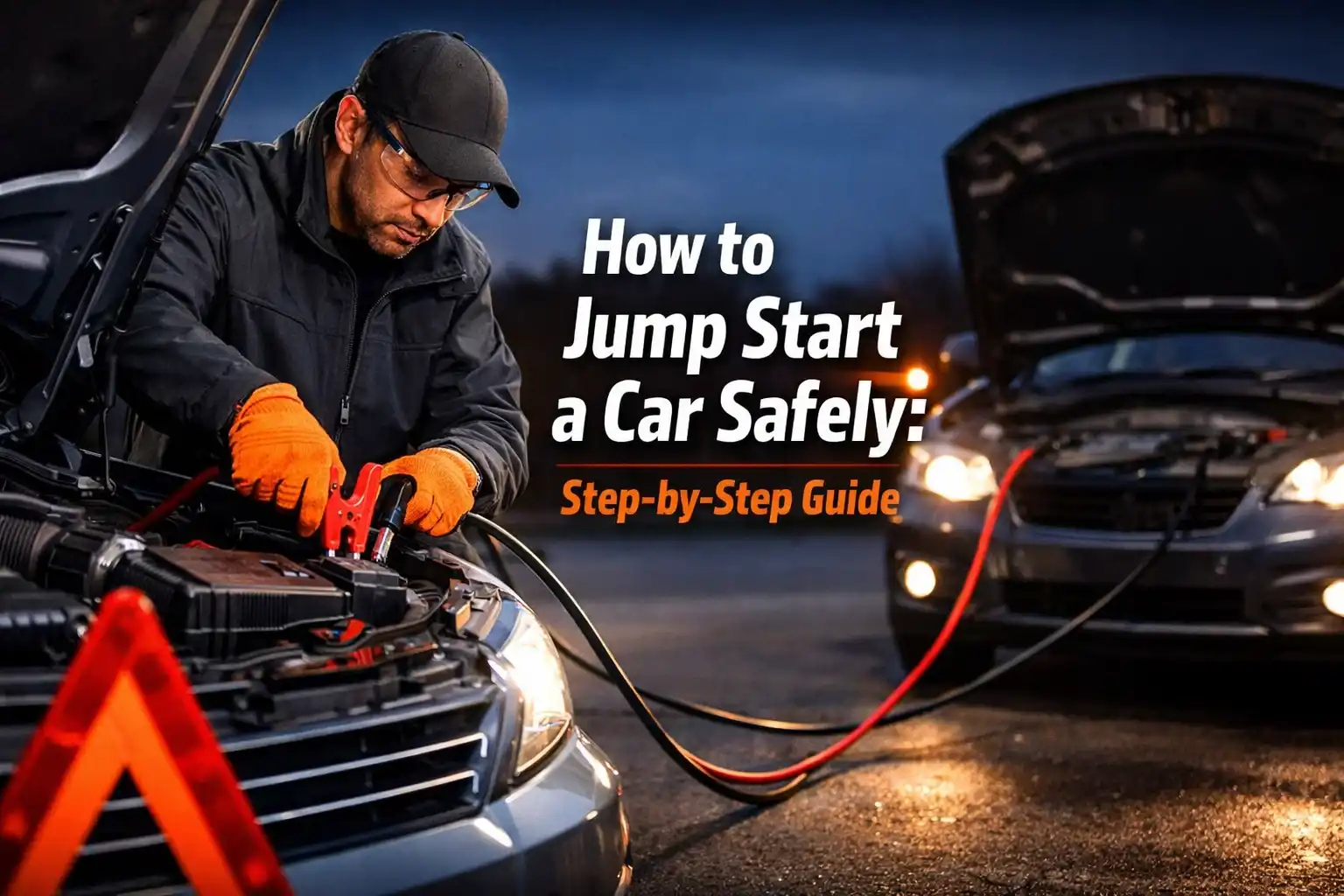
Imagine you’re getting ready for work, you get in your car, turn the key, and nothing happens. Just a clicking sound or complete silence. It’s one of the most frustrating moments any driver can face. A dead car battery is one of the most common vehicle problems and knowing how to jump start a car can save you from being stranded on the roadside for hours.
In this post, we’ll walk you through everything step by step from gathering your equipment to safely removing the cables so you’re always ready when your battery lets you down.
What You Need Before Jump Starting a Car
Before you even lift your car’s hood, make sure you have the right tools ready. Trying to jump start without proper equipment can lead to sparks, electrical damage, or even injury.
Here’s what you’ll need:
- Jumper cables choose 4 to 6 gauge, heavy-duty insulated cables. Thicker cables transfer more power and reduce heat during the jump.
- A working donor vehicle with a fully charged 12-volt battery
- Safety gloves and eye protection battery acid is no joke
- Optional: A portable jump starter pack great for solo drivers with no nearby vehicle
- Optional: A wrench or pliers in case of corroded battery terminals
Quick tip: Not all jumper cables are the same. Cheap, thin cables can overheat and fail. Always invest in a quality booster cable set rated for your vehicle type.
Important Safety Precautions
This section might be the most important part of this entire guide. Skipping safety steps is how accidents happen. Please read this before you touch anything under the hood.
- Always put both vehicles in park (or neutral for manual cars) with the parking brake engaged
- Turn off both engines before connecting cables
- Never connect the negative clamp directly to the dead battery’s negative terminal always ground it to an unpainted metal surface on the car’s frame
- Keep cables away from moving engine parts like fans and belts
- Never jump start a frozen battery it can crack or even explode
- If you see battery leakage or cracks, do NOT attempt a jump; call a professional
- Modern vehicles have sensitive electronic control units (ECUs) wrong polarity can damage them instantly
Step-by-Step: How to Jump Start a Car Properly
Follow these steps exactly. The order matters. Doing this in the wrong sequence is the #1 mistake people make.
Step 1 – Position Both Vehicles Correctly
Park the donor vehicle nose-to-nose with the dead car, or side by side. The two batteries should be close enough that your jumper cables can reach both, usually within 18 inches. Make sure the cars are not touching each other. Turn off both engines completely.
Step 2 – Identify Positive and Negative Terminals
Open both hoods and locate the batteries. Every 12-volt car battery has two terminals:
- Positive (+) — usually marked with a red cap or red wire
- Negative (−) — usually marked with a black cap or black wire
Most modern vehicles use either a lead-acid battery or an AGM (Absorbent Glass Mat) battery. A fully charged battery reads 12.6 volts. Anything below 12V means it’s significantly drained and may need more than just a jump.
Step 3 – Connect Jumper Cables in Correct Order
This is the most critical step. Follow this exact order:
- Red clamp → dead battery positive (+)
- Red clamp → donor battery positive (+)
- Black clamp → donor battery negative (−)
- Black clamp → unpainted metal surface on dead car (NOT the negative terminal)
Why ground to the metal instead of the battery? This reduces the risk of a hydrogen gas ignition near the battery. It’s a small step that matters a lot for safety.
Step 4 – Start the Donor Vehicle
Start the working vehicle and let it run for 3 to 5 minutes. This allows the donor battery to transfer some charge to the dead battery before you try to start it. You can rev the engine slightly around 1,500 RPM to speed up the process.
Step 5 – Start the Dead Vehicle
Now try to start the car with the dead battery. Turn the ignition key slowly. If the engine cranks but doesn’t start, wait another 2–3 minutes and try again. If nothing happens at all, no crank, no sound, the problem may be beyond the battery (see the troubleshooting section below).
Step 6 – Let the Engine Run (How Long?)
Once the dead car starts, keep both engines running for at least 10 to 15 minutes before disconnecting the cables. This gives the alternator time to push charge back into the battery. Driving the car for 20–30 minutes after the jump is even better.
Why 10–15 minutes? A battery heavily discharged overnight can suffer from battery sulfation, a chemical buildup that reduces capacity. Giving it a longer run time helps reverse early sulfation and stabilizes the charge.
Step 7 – Remove Cables in Reverse Order
Remove the jumper cables in the exact reverse order you connected them:
- Black clamp from grounded metal on a previously dead car
- Black clamp from donor battery negative
- Red clamp from donor battery positive
- Red clamp from previously dead battery positive
Never let the clamps touch each other while any end is still connected. That’s how sparks and accidents happen.
Quick Reference Table: Common Jump Start Issues
|
Issue |
Possible Cause |
Solution |
Urgency |
|
Clicking sound |
Weak/low battery |
Jump start |
Moderate |
|
The engine won’t crank |
Completely dead battery |
Jump or replace |
High |
|
The car dies after a jump |
Faulty alternator |
Mechanic inspection |
High |
|
Sparks while connecting |
Wrong cable order |
Disconnect immediately |
Critical |
|
Slow engine crank |
Low cold cranking amps |
Battery test needed |
Moderate |
|
Dashboard lights only |
Partial charge / loose terminals |
Check connections first |
Low |
What to Do If the Car Won’t Start After a Jump
If you’ve followed every step and the car still won’t start, don’t panic. Here’s what might be going on:
- Bad alternator: If the car starts but dies again shortly after, the alternator isn’t recharging the battery. You need a mechanic.
- Faulty starter motor: If you hear nothing, no click, no crank, the starter may be the issue, not the battery.
- Battery voltage below 10V: A battery that’s too deeply discharged may not respond to a standard jump. A portable jump starter pack with higher output may help.
- Corroded or loose terminals: Clean the battery terminal connections with a wire brush and try again.
For situations where you’re also dealing with other roadside emergencies, our fuel delivery service is available 24/7 alongside battery assistance.
How Long Does a Jump Start Last?
A jump start is not a permanent fix. It’s a temporary restart. Here’s what to expect:
- If the alternator is working fine, the battery will recharge while you drive. You may get days or weeks of normal use.
- If the alternator is failing, the car may die again within minutes or hours.
- If the battery is old or weak, Frequent jumps mean you’re overdue for a car battery replacement.
Think of a jump start like a defibrillator for your car; it gets the heart beating again, but it doesn’t cure the underlying condition. If your battery keeps dying, get it tested. Most auto shops will check battery voltage and cold cranking amps (CCA) for free.
Jump Start vs Battery Replacement: How to Decide
|
Factor |
Jump Start |
Battery Replacement |
|
Cost |
Free / Low |
£80–£150 average |
|
Time |
10–20 minutes |
30–60 minutes |
|
When to choose |
One-off dead battery |
Battery 3+ years old, repeated failures |
|
Risk |
Low (if done right) |
No permanent fix |
|
Best for |
Emergency roadside |
Long-term reliability |
Signs Your Battery Needs Replacement
Sometimes jump-starting is just delaying the inevitable. Here are the warning signs your battery is past its prime:
- Slow engine crank every time you start the car
- Dim headlights or interior lights, especially at idle
- The battery warning light on your dashboard
- Visible corrosion on terminals (white or blue powder buildup)
- A bulging or swollen battery casing should be replaced immediately; this is dangerous.
- The battery is 3–5 years old, or older average lifespan of 3–5 years
Not sure if it’s time? Read our guide on the signs you need a car tyre replacement. The same logic of spotting wear before it becomes an emergency applies to batteries, too.
Common Mistakes to Avoid When Jump Starting
Even experienced drivers make these errors. Avoid them, and you’ll be fine:
- Reversing the cables red to negative or black to positive can damage your ECU, blow fuses, or start a fire
- Letting clamps touch even for a second causes dangerous sparks
- Not grounding the black clamp to a metal surface, a direct negative-to-negative connection increases battery explosion risk.
- Skipping the waiting time, trying to start too soon, before the charge has transferred, often fails
- Jump starting in the rain without cover and standing water near open battery terminals is risky.
- Attempting to jump a visibly damaged battery with cracks, leaks, and bulges means stopping and calling for help.
Can You Jump Start a Hybrid or Automatic Car?
Great question, and one that trips up a lot of drivers. The short answer: yes, but with extra care.
Automatic cars: Jump starting works the same way. The automatic transmission has nothing to do with the battery. Follow the same steps above.
Hybrid and electric vehicles (EVs): Most hybrids, like the Toyota Prius and Honda Insight, have a small 12V auxiliary battery in addition to the main high-voltage pack. You can jump-start the 12V system using standard jumper cables, but never connect to the high-voltage hybrid battery. Always check your owner’s manual first. For full EVs like Tesla, consult the vehicle manual or call a certified technician.
According to Firestone Complete Auto Care, most hybrid owners are surprised to learn their car can die from a dead 12V battery even with a fully charged main battery.
When to Call a Professional Jump Start Service
Sometimes the situation calls for expert help. Call a professional if:
- You don’t have jumper cables or a portable jump starter
- The car won’t start even after a proper jump attempt
- You’re unsure about terminal polarity, or the battery looks damaged
- You’re on a busy motorway or in an unsafe location
- The vehicle is a hybrid or EV, and you’re not sure about the battery system
Rapid Fix Mobile Tyres offers 24/7 battery jump start service and on-site mobile battery replacement, so you’re never stranded for long. Our trained technicians arrive quickly, assess the situation safely, and get you back on the road without risking further damage to your vehicle.
Alternatives to Jump Starting a Car
Jump starting isn’t always possible or practical. Here are your other options:
- Portable jump starter pack: A compact lithium battery pack you keep in your car. No donor vehicle needed. Prices start from around £30, and they’re a smart investment.
- Towing to an auto repair shop: If the battery is completely dead and not responding, towing may be the only option.
- Mobile battery replacement: A technician brings a new battery to you; no garage visit is needed.
- Battery trickle charger: For overnight charging at home, great for maintaining battery health if your car sits unused for long periods.
Final Verdict
Knowing how to jump-start a car is a skill every driver should have. It’s not complicated; it just takes the right equipment, the right order, and a calm approach. From identifying your positive and negative terminals to safely removing cables in reverse, each step builds toward getting you back on the road safely.
But if the battery keeps dying, a jump start is only buying you time. Watch for warning signs like slow cranking, dim lights, or a battery warning light and act before you’re stranded. Whether it’s a dead car battery solution you need right now or a proper battery maintenance check, don’t wait until you’re stuck in the dark.
Stuck on the roadside and need fast help? Contact Rapid Fix Mobile Tyres for 24/7 emergency battery jump start and mobile battery replacement. We come to you, wherever you are. Don’t let a dead battery ruin your day.
Frequently Asked Questions
1. How long does it take to jump-start a car?
The actual connection and start process takes around 5 to 10 minutes. However, you should let the engine run for 10 to 15 minutes after the jump to allow the battery to take on a reasonable charge before disconnecting.
2. Can a completely dead battery be jump-started?
It depends on how dead it is. If the battery voltage has dropped below 3–4 volts due to deep discharge or a parasitic battery drain over several weeks, a standard jump may not work. In that case, a dedicated battery charger or full replacement is the better option.
3. What happens if jumper cables are reversed?
Reversing the cables connecting red to negative and black to positive can cause blown fuses, damage to the ECU, alternator failure, or even a battery fire. Always double-check polarity before connecting anything.
4. How often can I safely jump-start my car?
Technically, you can jump-start a car multiple times, but it’s a sign of a deeper problem. If you’re jump-starting more than once a month, you likely have a failing battery, a parasitic battery drain issue, or an alternator failure. Get it checked.
5. Can you jump-start a hybrid vehicle?
Yes, through the 12V auxiliary battery, not the main high-voltage battery pack. Locate the 12V jump start point in your vehicle manual (it’s sometimes in the engine bay, sometimes in the boot). Never touch the orange cables in a hybrid; those are high voltage.