Steering Wheel Shakes When Braking Top Causes and Fixes
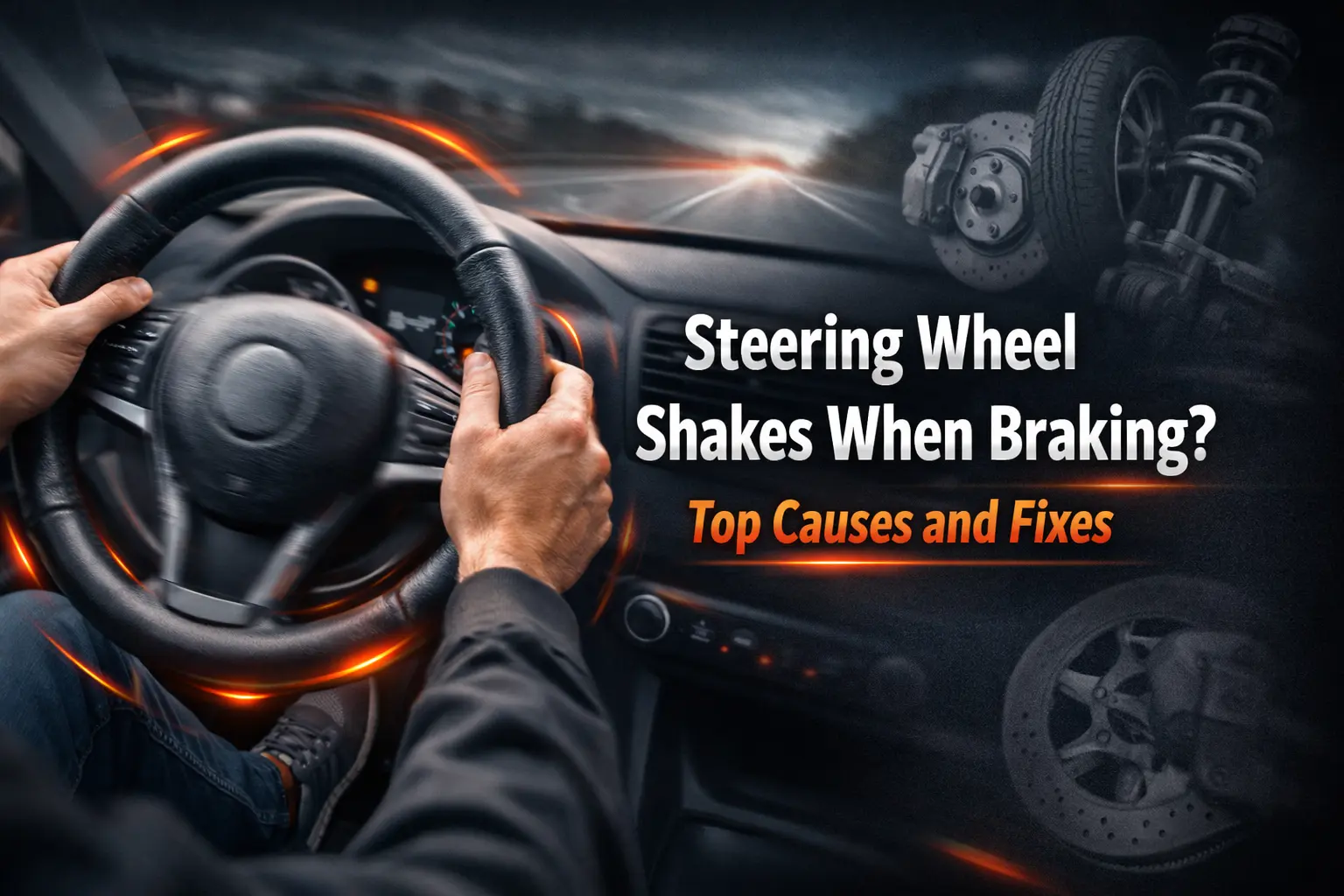
Imagine you’re driving on the motorway, everything feels normal, and then you press the brakes. Suddenly, your steering wheel starts to shake, as if something is seriously wrong. Your heart skips a beat. You grip the wheel tighter. Sound familiar?
This is one of the most common complaints drivers bring to mechanics. And honestly, it’s one of the scariest feelings on the road. But here’s the good news: steering wheel shake when braking is usually caused by something fixable. You don’t always need to panic or spend a fortune.
In this blog post, we’ll explain the major causes, clear warning signs, actual repair costs, and simple fixes. By the end, you’ll know exactly what’s going on with your car and what to do next.
What Does Steering Wheel Shake When Braking Actually Mean?
Your braking system and steering system are connected through your car’s front axle and suspension. When you press the brakes, the brake pads press against the disc rotors to slow down the wheels. This creates friction.
If anything in this process is uneven, a warped disc, a worn pad, or a loose component, that unevenness travels up through the wheel hub, through the steering column, and straight into your hands as vibration feedback.
Think of it like a wobbly spinning top. When it spins perfectly, it’s smooth. When it’s even slightly off-balance, you can feel it shake. Your car works the same way.
The vibration transfer to the steering wheel is your car’s way of telling you something needs attention.
Top Causes of Steering Wheel Vibration When Braking
Let’s break down every major cause from the most common to the ones most drivers completely ignore.
1. Warped Brake Discs — The #1 Culprit
Warped brake discs are responsible for the majority of braking vibration cases. When you brake hard or repeatedly, especially at high speed, your rotors build up enormous heat. Over time, this heat buildup in the brakes causes the disc surface to warp slightly.
Even a fraction of a millimetre of unevenness is enough to cause a noticeable pulsating brake pedal and shake in the steering wheel.
Warped brake discs symptoms include:
- Steering wheel wobble that gets worse at higher speeds
- A rhythmic pulsing feeling through the brake pedal
- A vibration that fades once you stop pressing the brakes
According to a 2022 survey by the RAC, warped or worn brake discs account for nearly 35% of all brake-related call-outs in the UK. That’s a big number.
2. Worn or Uneven Brake Pads
Uneven brake pad wear is another very common cause. When brake pads wear down unevenly, they create inconsistent braking force, meaning one side grips harder than the other.
This imbalance causes your car to pull slightly to one side and sends vibration back through the steering. You might also hear a squeaking or grinding noise alongside the shake.
Most brake pads are designed to last between 30,000 to 70,000 miles, but aggressive driving, city stop-start traffic, and poor maintenance all speed up mechanical wear and tear.
3. Wheel Imbalance or Misalignment
Sometimes the tyres themselves are the problem, not the brakes. Wheel imbalance symptoms typically include a vibration that starts at a specific speed and can get worse when you apply the brakes.
Rotational imbalance happens when the weight of a tyre and wheel isn’t evenly distributed. Even a small 10-gram imbalance can cause noticeable shaking at motorway speeds.
Wheel alignment issues, where your wheels point slightly in the wrong direction, add extra stress to tyres and suspension components during braking, which makes the shaking worse.
4. Suspension System Problems
Your suspension system absorbs bumps and keeps your tyres in contact with the road. When suspension parts like control arms, bushings, or shock absorbers wear out, they can no longer properly control wheel movement during braking.
The result? Front end shaking when braking, sometimes violent enough to feel alarming.
Common suspension symptoms:
- Shaking at any speed when braking
- Clunking sounds over bumps
- The car feels loose or unstable during cornering
If you notice your car shaking while driving, even without braking, it could be a suspension issue. You can read more about that in our guide on car shaking while driving.
5. Tyre Issues — The Hidden Cause Many Drivers Ignore
Tyre problems causing shaking are often overlooked. Uneven tyre tread wear caused by poor alignment, incorrect tyre pressure, or skipping tyre rotations creates an uneven contact patch with the road.
When you brake, this uneven surface contact causes vibration that travels into the steering wheel. A damaged or bulging tyre can make this significantly worse.
If you’re seeing abnormal wear patterns, check out our guide on signs you need car tyre replacement to know when it’s time to act.
6. Sticking Brake Callipers
A sticking brake calliper is less common but more serious. The calliper holds the brake pads and squeezes them against the disc. When a calliper gets stuck, often due to corrosion or a seized piston, it applies uneven pressure on the disc.
This leads to:
- Strong pulling to one side when braking
- Persistent brake vibration even after the car stops
- Overheating brakes (you may even smell burning)
Quick Diagnosis Table
Symptom | Likely Cause | Speed Condition | Severity | Safe to Drive? |
Steering wobbles at high speed | Warped brake discs | High speed | High | No |
Vibration + squeaking noise | Worn/uneven brake pads | Any speed | Medium-High | Limited |
Steering wobble at low speed | Tyre or wheel imbalance | Low speed | Medium | Caution |
Pulsating pedal + shake | Uneven discs or pads | Any speed | High | No |
Shaking + clunking | Suspension component | Any speed | High | No |
Pulling + burning smell | Sticking caliper | Any speed | Critical | No |
Why Does My Car Shake When Braking at High Speed?
Car shakes when braking at high speed is almost always linked to warped brake discs or severe wheel imbalance. At high speeds, the rotational forces are much greater, so even a small warp in the disc rotor surface becomes amplified.
Here’s the science in simple terms: when you brake from 70mph, your brakes can reach temperatures of 300–600°C in just a few seconds. Repeated high-speed stops like heavy motorway braking cause heat expansion that slowly distorts the disc surface over time.
Brands like Brembo and Bosch design high-performance rotors specifically to handle this heat. But standard OEM discs on most everyday cars are more vulnerable to warping under repeated stress.
Is It Safe to Drive If Your Steering Wheel Shakes When Braking?
The short answer: in most cases, no it’s not safe.
Here’s why:
- Increased braking distance, uneven braking force means it takes longer to stop
- Loss of steering control vibration reduces your ability to steer precisely during emergency stops
- Risk of further damage, a warped disc left untreated can damage brake pads faster, adding to repair costs
- MOT failure braking faults are one of the top reasons cars fail their MOT in the UK
The longer you ignore it, the worse and more expensive it gets.
How to Fix Steering Wheel Shake When Braking
Step 1 — Inspect Brake Discs and Pads
Start by visually checking your brake discs through the wheel spokes. Look for:
- Deep grooves or scoring on the disc surface
- Uneven or very thin brake pads
- Rust build-up around the disc edges (some surface rust is normal; heavy pitting isn’t)
Step 2 — Check Wheel Balance and Alignment
Have your wheel balancing and vehicle alignment checked at a professional garage. This is especially important if you recently hit a kerb or pothole. Small wheel weights are added to correct imbalances — a quick and inexpensive fix.
Step 3 — Inspect Suspension Components
A mechanic will check bushings, control arms, and shock absorbers for wear. Worn suspension components can often be felt as looseness in the steering, not just vibration.
Step 4 — Replace or Repair Faulty Parts
If inspection confirms the fault, replace what needs replacing. Don’t mix and match; always replace brake discs and pads in pairs (both sides of the axle) for balanced braking performance.
For tyre issues, check our full guide on tyre repair vs tyre replacement to decide the most cost-effective route.
Repair Costs Breakdown
Repair Needed | Estimated Cost (UK) | Repair Time | Urgency |
Brake disc replacement (pair) | £150–£300 | 1–2 hours | High |
Brake pad replacement | £80–£150 | 1 hour | High |
Wheel balancing | £40–£80 | 30 minutes | Medium |
Wheel alignment | £50–£100 | 30–60 minutes | Medium |
Suspension repair | £100–£400 | 2–4 hours | High |
Brake calliper replacement | £120–£250 | 1–2 hours | Critical |
Costs vary by vehicle make and model. A BMW or Mercedes brake job will cost more than a Ford Fiesta, for example. Always get at least two quotes before committing.
For real-world pricing in your area, the RAC’s car maintenance cost guide is an excellent, trusted reference.
How to Prevent Steering Wheel Vibration When Braking
Prevention is always cheaper than repair. Follow these habits:
- Get brake inspections every 12,000 miles or once a year
- Avoid harsh, repeated braking, especially downhill or at motorway speeds
- Maintain correct tyre pressure, check it monthly (find the correct pressure in your door sill sticker)
- Book wheel alignment checks every 12–18 months or after any significant impact
- Rotate your tyres regularly to prevent uneven wear. Our tyre rotation service page explains when and why this matters
Conclusion
Steering wheel shake when braking is your car sending you a clear message that something in your braking system needs attention. The most common cause is warped brake discs, followed by worn brake pads, tyre issues, and suspension problems. Each of these is fixable, especially when caught early.
Don’t wait until the vibration becomes a bigger and costlier problem. If your steering wheel shakes, wobbles, or pulls when you brake, get it looked at as soon as possible. The longer you delay, the greater the risk to your safety and your wallet.
If you’re in the Woking area and need fast, reliable help, Rapid Fix Mobile Tyres comes to you; there’s no need to drive an unsafe vehicle to a garage. Book your inspection today and get back to smooth, safe driving fast.
FAQs
1. Why does my steering wheel shake when I brake at high speed?
Most likely warped brake discs caused by heat expansion during repeated high-speed braking. Less commonly, it could be a severe wheel imbalance.
2. Can warped brake discs fix themselves?
No. Once a disc is warped, it won’t straighten on its own. It needs to be either machined flat (if enough material remains) or replaced entirely.
3. Is it expensive to fix brake vibration?
Not always. Brake pad replacement starts from around £80. Full disc and pad replacement typically costs £150–£300 per axle in the UK.
4. Can tyres cause steering wheel vibration when braking?
Yes. Uneven tyre tread wear or a damaged tyre creates uneven road contact, which you feel as vibration, especially under braking.
5. How long can I drive with shaking brakes?
You shouldn’t. Even mild vibration indicates reduced braking efficiency. The longer you delay, the greater the safety risk and repair cost.
6. Does wheel alignment fix braking vibration?
It can help if misalignment is contributing to tyre wear or uneven braking. But if the root cause is warped discs or worn pads, alignment alone won’t solve it.