Tyre Pressure Warning Light On? What It Means and What To Do
That small glowing symbol on your dashboard can send your heart racing, especially when you’re driving on a busy road or motorway. The tyre pressure warning light is one of the most common dashboard alerts drivers see, and yet most people don’t know exactly what to do when it appears.
In most cases, it’s not a major emergency. But ignoring it? That’s where things can go wrong. A low tyre pressure alert can affect your fuel economy, your steering, your braking and in the worst cases, it can lead to a dangerous blowout.
In this post, we will explain everything you need to know about the dashboard tyre pressure light, what causes it, how to fix it, when to reset it, and when to call for professional help. Whether you’re a new driver or an experienced one, this article has everything you need.
What Does the Tyre Pressure Warning Light Mean?
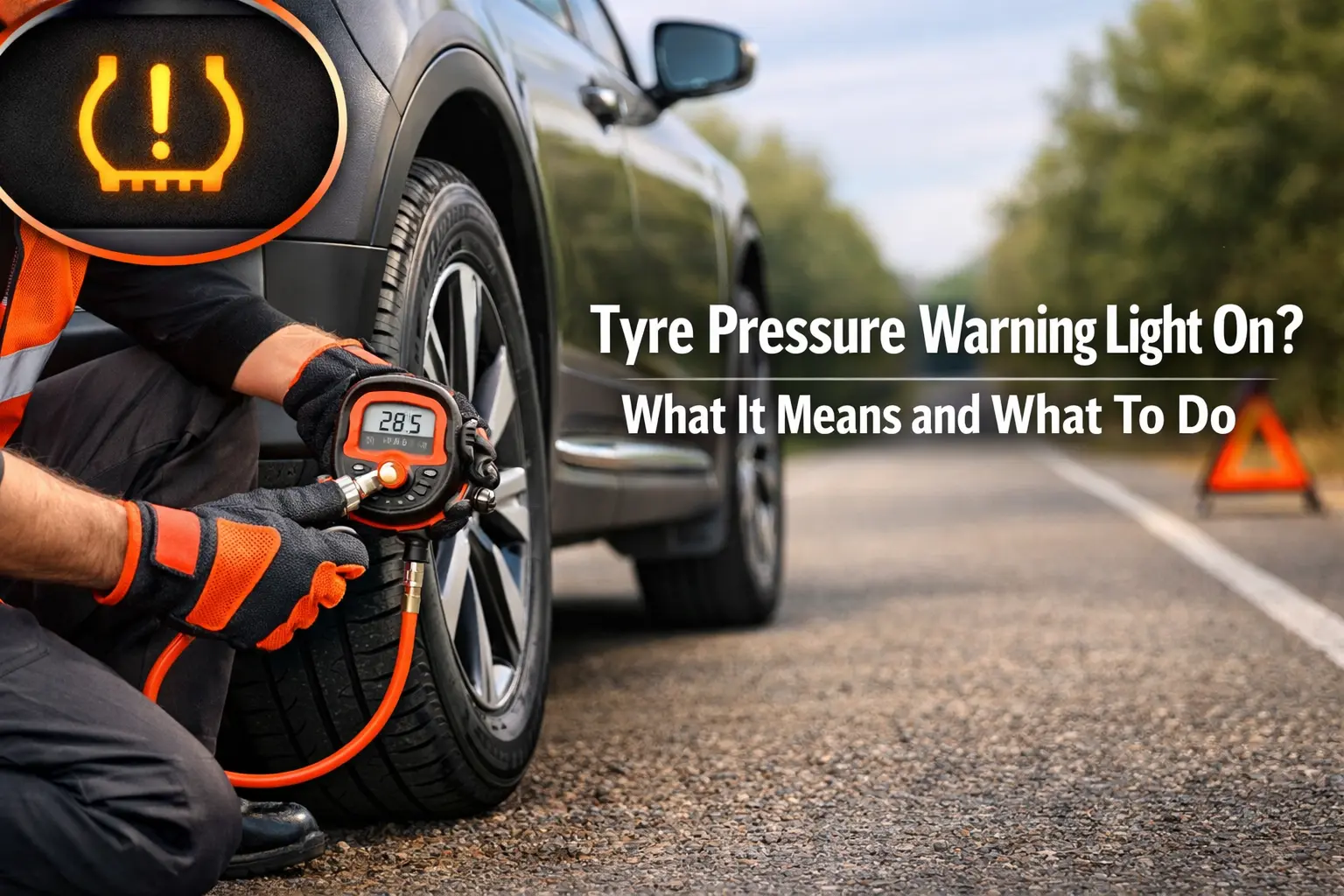
The tyre pressure warning light is part of your car’s Tyre Pressure Monitoring System (TPMS), a built-in vehicle safety system designed to alert you in real time when one or more of your tyres drops below the safe pressure level. It usually looks like a yellow tyre icon with an exclamation mark inside, sitting on your dashboard. When this dashboard warning light comes on, it means the system’s tyre pressure sensors mounted on each wheel have detected a pressure drop that could affect your safety.
Most modern vehicles in the UK have TPMS fitted as standard, especially those manufactured after 2014, when it became a legal requirement for new cars in Europe.
What’s the Normal Tyre Pressure?
Tyre pressure is measured in PSI (pounds per square inch). The recommended level varies by vehicle, but most standard cars sit between 30–35 PSI. You can find your car’s specific manufacturer-recommended pressure on a sticker inside the driver’s door frame or in your owner’s manual.
Vehicle Type | Typical PSI Range |
Small hatchbacks | 28–32 PSI |
Saloons & estates | 30–36 PSI |
SUVs & 4x4s | 32–40 PSI |
Vans & light commercials | 40–65 PSI |
Common Causes of the Tyre Pressure Warning Light
Low Tyre Pressure
The most common reason your low tyre pressure warning light comes on is simply that one or more tyres have lost air. Tyres naturally lose around 1–3 PSI per month, even without any damage; this is called permeation. A significant PSI drop triggers the sensor and lights up the car tyre pressure warning light.
You might also notice the tyre pressure light on, but the tyres fine situation where the tyres look okay from the outside, but the pressure is slightly below the required level. This is perfectly normal and just means you need a top-up.
Cold or Hot Weather Effects
Temperature has a direct impact on your tyre air pressure. According to the U.S. Department of Energy, tyres lose approximately 1 PSI for every 10°F (5.6°C) drop in temperature. So when winter hits, don’t be surprised to see your TPMS warning light come on without any visible damage. This is one of the biggest reasons why the tyre pressure warning light stays on after filling tyres. You fill them on a cold morning, drive a bit, and the pressure still reads low because the air hasn’t warmed up yet. Give it a few miles and check again.
Hot weather can cause the oppositeoverinflation which can also trigger alerts in some systems.
Sensor Malfunction or Battery Issue
Your tyre pressure sensor isn’t immune to wear. Each sensor has a battery inside with a lifespan of roughly 5–10 years or around 100,000 miles. When the battery dies or the sensor malfunctions, the TPMS warning light will stay on even if your tyre pressures are perfectly fine. This is often why the tyre pressure light won’t turn off even after inflating all four tyres correctly. If you’ve checked everything and the light still won’t budge, a sensor fault is likely the culprit.
Tyre Damage or Punctures
A slow puncture or a nail in your tread can cause gradual pressure loss, sometimes losing just 2–3 PSI per day, which is enough to trigger the low tyre pressure warning light but not obvious enough to see with the naked eye.
If you suspect a puncture, check out this guide on how to use a car tyre puncture repair kit for a quick, temporary fix before getting professional help.
What To Do When the Tyre Pressure Warning Light Comes On
Don’t panic. Follow these steps carefully, and you’ll handle it like a pro.
Step-by-Step Guide
Step 1: Find a safe place to stop and pull over safely as soon as possible. Don’t keep driving at high speed, as this risks further damage or a blowout.
Step 2: Visually inspect your tyres and walk around the car, and look at each tyre. Check for any obvious signs of underinflated tyres, such as a flat look, unusual bulges, or foreign objects like nails.
Step 3: Check tyre pressure with a gauge. Use a tyre pressure gauge, either digital or manual, to check the exact PSI of each tyre. Petrol stations across the UK have pressure machines, usually costing around 20–50p.
Step 4: Inflate to the recommended level. Use an air pump to bring your tyres up to the manufacturer’s recommended pressure. Always check when tyres are cold for the most accurate reading.
Step 5: Reset the TPMS if needed. If the light stays on after inflating, you may need to reset the system (more on this below).
Step 6: Check for punctures or damage. If pressure keeps dropping, there may be a slow puncture. Don’t ignore it, visit a professional or book a mobile tyre fitting service.
Is It Safe to Drive With the Warning Light On?
This is one of the most common questions, and the answer is: it depends, but generally, no, you shouldn’t.
If the light just came on and you’re close to a garage or safe stop, driving a short distance at low speed is usually okay. But driving long distances with low tyre pressure can:
- Reduce steering control and handling
- Increase stopping distances significantly
- Causes uneven and accelerated tyre wear
- Damage the tyre’s sidewall permanently
- Led to a sudden blowout at high speed
According to research by TyreSafe UK, underinflated tyres increase the risk of a blowout by up to 25% and can reduce fuel efficiency by around 0.5% per 1 PSI drop. Over time, that adds up fast.
For more on knowing when tyres are beyond saving, read our guide on the signs you need car tyre replacement.
How to Reset the Tyre Pressure Monitoring System (TPMS)
Once you’ve inflated your tyres, you may need to reset the system manually. There are two types of TPMS systems:
TPMS Type | How It Works | Reset Method |
Direct TPMS | Uses physical sensors in each wheel | Inflate tyres, press TPMS reset button, drive 10 mins |
Indirect TPMS | Uses ABS wheel speed sensors | Inflate tyres, drive at 30+ mph for 10–15 minutes |
How to Reset the TPMS (General Steps)
- Inflate all tyres to the recommended PSI
- Start the engine and let the car run for a few minutes
- Locate the TPMS reset button, usually found under the steering wheel, in the glove box, or in the centre console
- Hold the button until the warning light blinks three times
- Drive at 30 mph for 10–15 minutes, the tyre pressure sensor reset should complete automatically
If the light remains on after this, it’s likely a sensor malfunction and not a pressure issue. In that case, book a diagnostic check. For detailed guides on how to reset the tyre pressure light, you can refer to TyreSafe.org for manufacturer-specific advice.
When to Call a Mobile Tyre Service
Sometimes, the problem is bigger than a simple top-up. You should call for roadside tyre assistance if:
- You have a flat or blown tyre that can’t be driven on
- You notice visible tyre damage, cracks, bulges, or cuts in the sidewall
- The tyre keeps losing pressure repeatedly (sign of a slow puncture)
- Your TPMS sensor needs replacing, and you can’t reset the light
- You’re stranded and don’t have the tools or a spare tyre to fix it yourself
Rapid Fix Mobile Tyres provides fast, professional emergency tyre repair and tyre replacement directly at your location, whether you’re at home, at work, or broken down on the roadside. No need to wait for a tow truck or drive dangerously on a flat.
You can also learn more about what this service actually involves by reading what is mobile tyre fitting.
Tips to Prevent Tyre Pressure Issues
Prevention is always better than a breakdown. Here are simple habits to keep your tyres in top condition:
- Check tyre pressure monthly, ideally when tyres are cold, before a long journey
- Seasonal checks are a must; always check pressure when seasons change, especially going into winter
- Avoid both overinflation and underinflation, as both reduce grip and increase wear
- Rotate your tyres every 5,000–8,000 miles to ensure even wear. See our tyre rotation service for help
- Inspect visually every time you get in the car; it takes 10 seconds and could save your life
- Replace TPMS sensors when they reach the end of their battery life, typically every 5–7 years
Conclusion
The tyre pressure warning light is your car trying to talk to you, and it’s worth listening to. Whether it’s a simple pressure top-up, a seasonal pressure drop, a slow puncture, or a faulty sensor, acting quickly keeps you safe and saves you money in the long run. Always check your tyre pressure monthly, respond to the warning promptly, and never ignore a light that stays on after you’ve inflated your tyres.
If you’re unsure what’s causing the alert or you’ve found yourself with a flat or damaged tyre, don’t risk it. Rapid Fix Mobile Tyres is here to help fast, professionally, and at your location. Contact us today and get back on the road safely.
FAQs
1. Why is my tyre pressure warning light on, but tyres look fine?
The most likely cause is that one or more tyres are slightly below the recommended PSI, not enough to look flat, but enough to trigger the sensor. It could also be a temperature drop, a sensor fault, or a very slow puncture. Check the pressure with a gauge to confirm.
2. Can I drive with the tyre pressure warning light on?
For short distances at low speeds, it’s manageable. But it’s not recommended for long journeys. Underinflated tyres compromise safety, handling, and fuel economy. Address the issue as soon as possible.
3. How do I reset the tyre pressure light?
Inflate all tyres to the correct PSI, then press and hold the TPMS reset button for a few seconds until the light blinks. Then drive for 10–15 minutes at around 30 mph. If it doesn’t clear, your sensor may need professional attention.
4. What causes the tyre pressure warning light to come on?
The main causes are low air pressure, temperature changes, a slow puncture, tyre damage, or a faulty/dead TPMS sensor battery.
5. How often should I check tyre pressure?
At least once a month and before any long journey. Always check when tyres are cold for the most accurate reading.
6. Does cold weather affect tyre pressure?
Yes. Tyres lose around 1 PSI for every 10°F (5.6°C) temperature drop. This is why the warning light is more common in the winter months.
7. Are TPMS sensors expensive to replace?
In the UK, a single TPMS sensor replacement typically costs between £50–£100, including fitting. Prices vary by car make and model. Compared to the cost of a blowout or accident from ignoring the warning, it’s well worth it.